 English
 French
 German


Additional information
| Weight | 1 kg |
|---|---|
| Dimensions | 42 × 30 × 0.2 cm |
| Options: | Unframed, White frame, Black frame, Wooden frame |
Price range: R1,599.00 through R2,199.00
Explore the cultural revolution in ijusi Issue #4 (1996), the ‘Rave Issue,’ unveiling the explosive Durban music scene post-1994 elections and lifted restrictions. Delve into a captivating event in northern Zululand, where locals and guests revel in a day-long celebration at the inauguration of a new primary school. Immerse yourself in traditional dancing, festive drinks, delectable food, and unique experiences enhanced by ‘herbal products.’ Witness the convergence of cultural expression and social transformation in this iconic issue capturing the pulse of post-apartheid South Africa.
| Weight | 1 kg |
|---|---|
| Dimensions | 42 × 30 × 0.2 cm |
| Options: | Unframed, White frame, Black frame, Wooden frame |

Discover the essence of Ubuntu, meaning ‘I am, because you are.’ Rooted in the Zulu phrase ‘Umuntu ngumuntu ngabantu,’ it embodies the interconnectedness of individuals. This artwork incorporates sheep heads, symbolizing unity between black and white South Africans in the true spirit of Ubuntu. Cooked as a delicacy, sheep heads represent affordable, communal fast food enjoyed by diverse communities, illustrating the shared humanity inherent in Ubuntu’s profound philosophy.

‘Stop! Go!’ is an iconic ijusi graphic designed by Garth Walker, showcased in iJusi magazine’s fourth issue on page 6.Explore authentic ijusi cover artwork from 1995, featuring original Zulu patterns and colors. The central circular sun motif replicates a traditional Zulu earplug, crafted from timber and vinyl. This unique piece reflects an early attempt to create graphic icons, making it a highly collectible item.

Dive into the thought-provoking realm of ijusi Issue #8 (1999), aptly named the ‘Black & White Issue.’ Explore a collection of captivating black and white illustrations delving into South Africa’s complex history of race relations and apartheid. Discover the designers’ personal views and experiences in a ‘black and white’ South Africa, offering a unique perspective on the nation’s past.
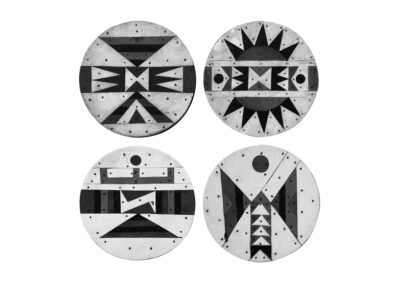
Uncover Zulu culture through earplugs, vital in pre-puberty ceremonies. Stretched over time, these earplugs symbolized domicile, clan, and Zulu identity with distinctive colors. In the 40s and 50s, artists reached new heights using Marley floor tiles, creating intricate designs with interlocking geometric patterns. Crafted in the Msinga area of KwaZulu-Natal, these earplugs, made with unique materials, epitomize Zulu artistic heritage.
Reviews
There are no reviews yet.